
Caring for a cat
How to care for a cat
Last updated 15 November 2025
On this page
How does my cat’s breed affect its needs?
It is important to understand your cat’s needs based off their breed characteristics. For example:
Bengals
Bengals are a high energy, athletic breed that requires a lot of exercise and stimulation to meet their needs. If these needs are not met, it is likely for them to develop behavioural problems.
Ragdolls
Ragdolls have been bred to desire human companionship. This means that they usually require more time with their owners as compared to other breeds.
Breeds with long or curly hair also require regular grooming sessions for fur maintenance. It is essential to comb their fur to prevent matting of their fur.
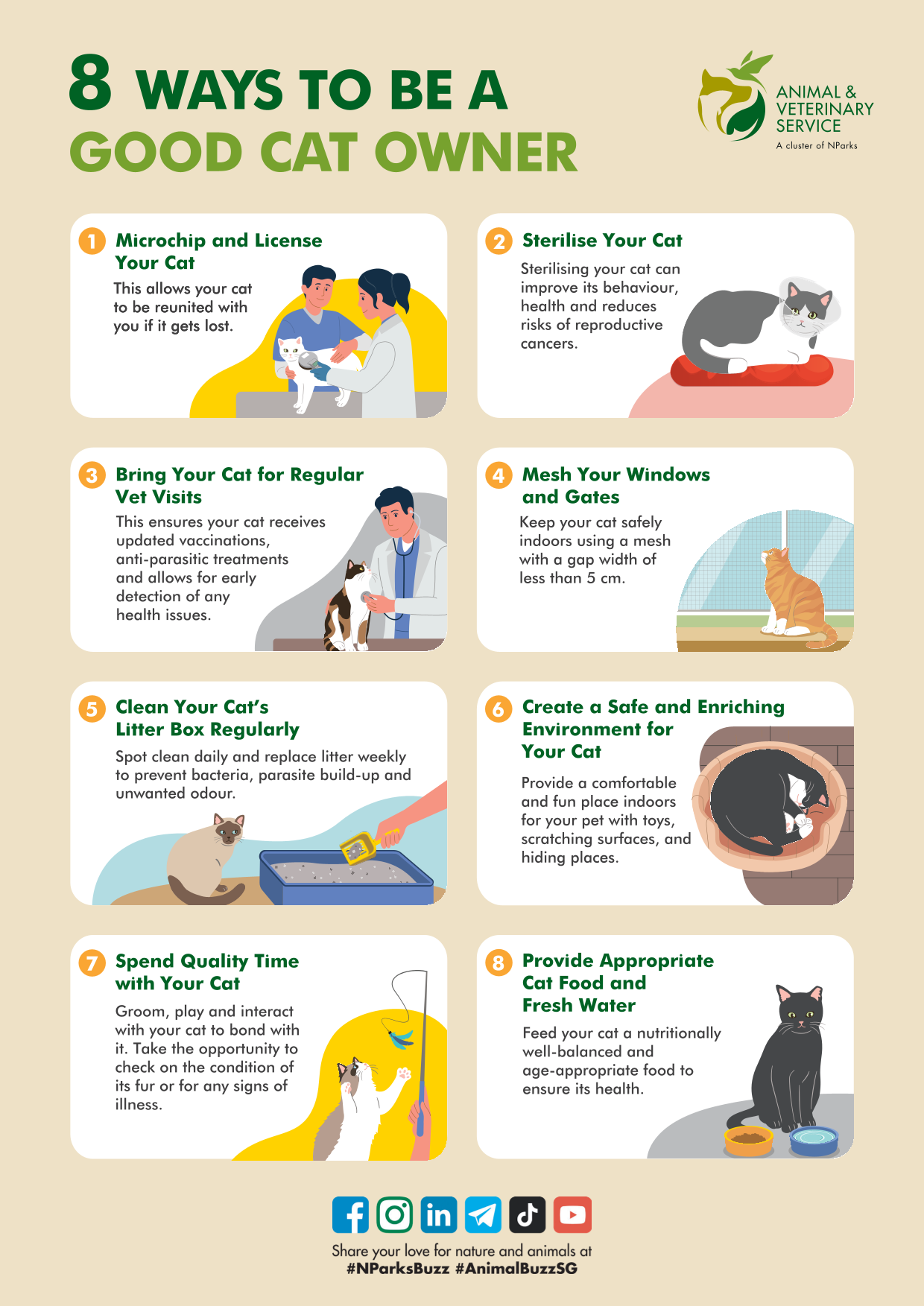
Download the infographic here:
Feeding a cat
Kittens, pregnant and nursing queens require more calories than adult cats, and the amount of calories your cat requires also decreases as they reach old age. Your cat’s Body Condition Score (BSC) is a good estimate of their weight. You may also check in regularly with your vets if you are unsure on what and how much food to feed.
Veterinary care for a cat
Bring your cat for annual veterinary checks and ensure that they are up-to-date with their vaccinations and preventatives.
Different breeds also have different health predispositions to look out for. For instance, Scottish folds tend to suffer from cartilage problems [Osteochondrodysplasia (OD)], while heart disease [Hypertrophic cardiomyopathy (HCM)] is common in ragdolls. It is important to know what health issues your cat might be predisposed to, so you can better prevent, treat and manage as they age.
If you suspect your cat is unwell, monitor its behaviour and appearance and seek veterinary assistance.
Enrichment for a cat
Cats should be kept indoors. However, as they may get bored, you can provide various types of enrichment within your household to meet their needs, such as:
Changing up their environment – E.g. Moving furniture around
Play sessions
Training sessions
Scatter-feeding
Kibbles in boxes
Agility courses
Snuffle mats
If you have multiple cats at home, always provide ample resources. This means that a 2-household cat should have 3 litter boxes, food bowls, water bowls, beds and other items. They should be spread out around the house. This ensures that each cat has access to their items without having to come across the other cat, preventing fights and aggression.