Antimicrobial Resistance
About antimicrobial resistance and our response
Last updated on 7 November 2025
What is antimicrobial resistance?
Antimicrobial resistance (AMR) occurs when bacteria, viruses, fungi and parasites no longer respond to antimicrobial agents. As a result of drug resistance, antibiotics and other antimicrobial agents become ineffective and infections become difficult or impossible to treat, increasing the risk of disease spread, severe illness and death.
Why is antimicrobial resistance a concern?
AMR is happening here and now. It is one of the biggest threats to global health, food security and development today.
Antimicrobial agents are used to prevent, control and treat infectious diseases in humans, animals and plants, but they are becoming increasingly ineffective. The misuse and overuse of antimicrobial agents has led to accelerated development and spread of AMR over the years.
A micro-organism’s resistance to existing antimicrobials is increasing faster than the development of new antimicrobials. The dwindling availability of effective antimicrobials means there are less defence mechanisms available to protect humans and animals against micro-organisms.
What is our response to antimicrobial resistance?
We recognise the threat that AMR poses to human health, animal health, and animal welfare globally. A “One Health” response to AMR will help save millions of lives, preserve antimicrobials for generations and secure the future from drug-resistant pathogens.
The national strategic action plan on AMR was developed in 2017, and is implemented by the Communicable Diseases Agency (CDA) (opens in new tab), Singapore Food Agency (SFA) (opens in new tab), National Parks Board (NParks) (opens in new tab), National Environment Agency (NEA) (opens in new tab), and PUB, Singapore's National Water Agency (opens in new tab). This plan consists of a framework that strengthens and enhances activities combating AMR, using a “One Health” approach. This term describes an approach involving the human, animal, food, and environment sectors.
What can I do as a pet owner?
Only use antibiotics when prescribed or administered by a veterinarian. Not every infectious disease requires antibiotics treatment.
Follow the dose, frequency, and length of treatment prescribed by your veterinarian, even if your pet seems to have recovered.
Keep your pet healthy. A healthy animal can better fight off infections.
Adopt preventative disease management measures. One way is to keep your animal’s vaccination and anti-parasitic treatment updated, as this prevents infections.
Download this brochure for pet owners (opens in new tab) which contains information on why and which vaccinations are important for dogs and cats, FAQs about vaccinations, and a table to keep track of pet vaccinations.

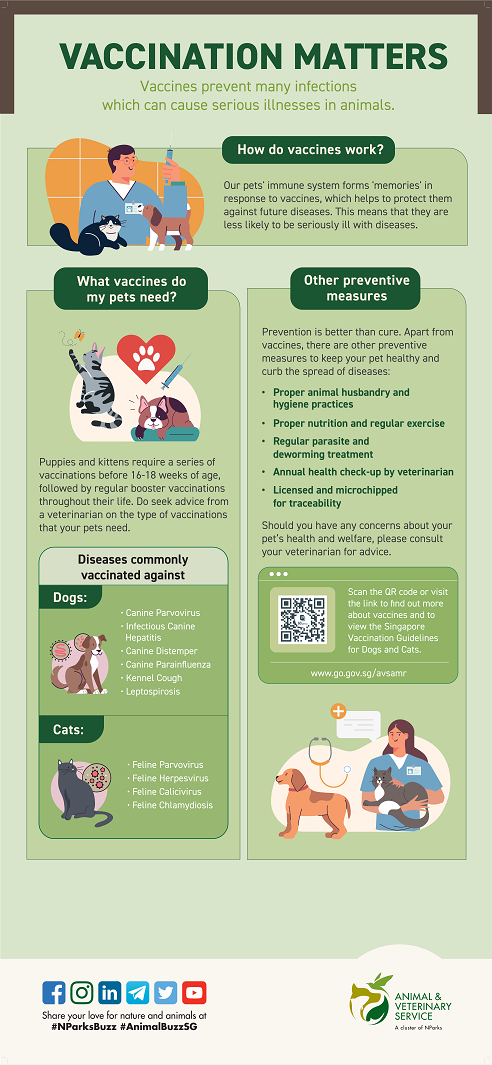
AVS has created infographics on AMR and vaccinations for pet owners.
Download them here:
Antimicrobial Resistance Infographic (opens in new tab)
Vaccination Infographic (opens in new tab)
Resources
Publication: National Strategic Action Plan on AMR (opens in new tab)
Publication: National Strategic Action Plan Progress Report (2018-2020) (opens in new tab)
Further information
World Organisation for Animal Health (WOAH) factsheet on antimicrobial resistance (opens in new tab)
World Organisation for Animal Health (WOAH) webpage on antimicrobial resistance (opens in new tab)
World Health Organization (WHO) webpage on antimicrobial resistance (opens in new tab)