
Estuarine Crocodiles in Singapore
About estuarine crocodiles in Singapore and what to do when you encounter them
Last updated 31 October 2025
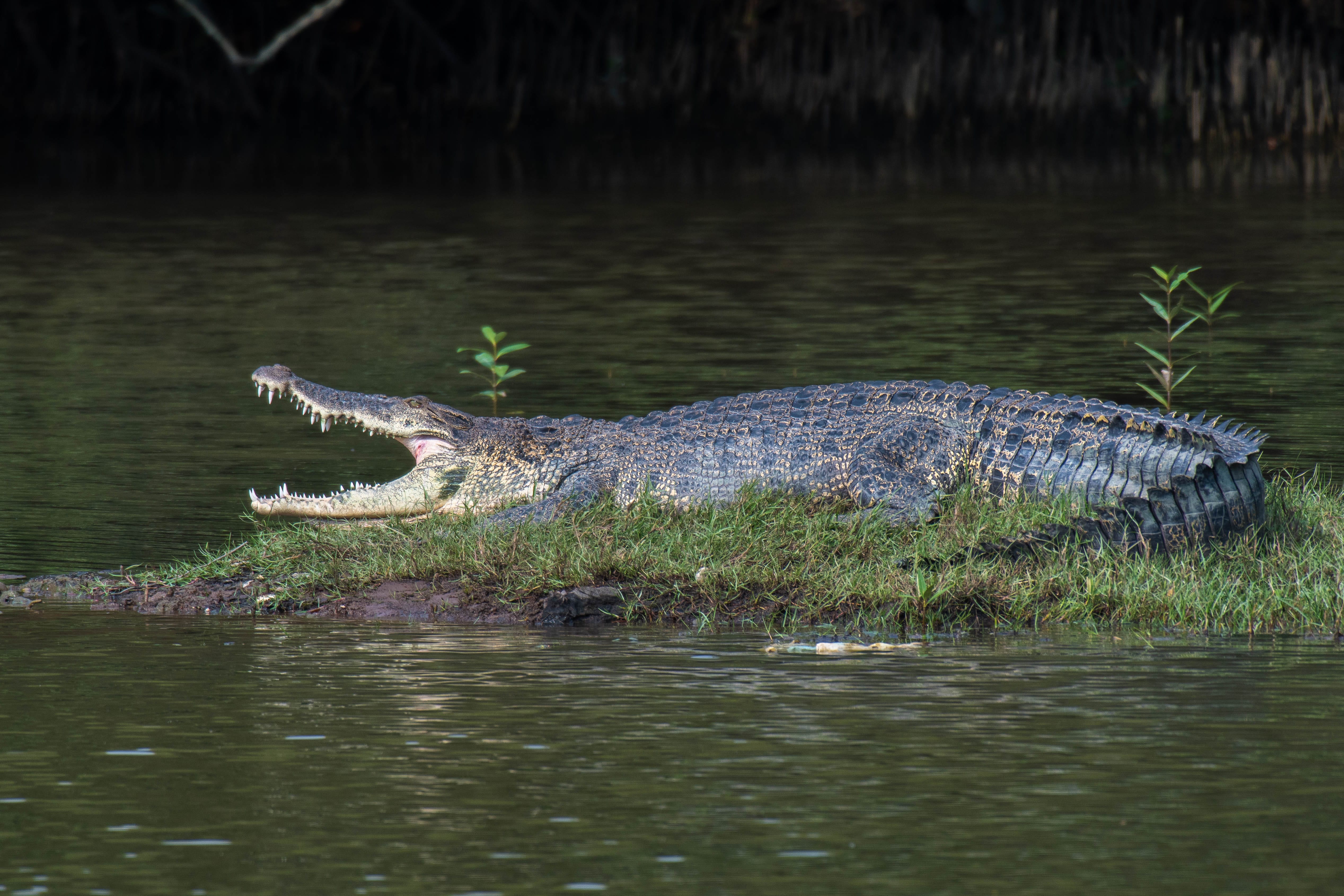
What are Estuarine Crocodiles?
Crocodiles are large reptiles with long, powerful bodies covered in tough, scaly skin and equipped with massive jaws containing rows of sharp teeth. These prehistoric-looking creatures have short legs, webbed feet, and muscular tails that make them excellent swimmers. They inhabit tropical regions across Asia, Africa, Australia and the Americas.
The species found in Singapore is the Estuarine Crocodile (Crocodylus porosus), also known as the Saltwater Crocodile. This species holds the distinction of being the world's largest crocodile, capable of reaching lengths of 6 to 7 metres. It is characterised by a long snout and a broad, muscular tail adorned with ridges.
Distribution & Habitat
Estuarine crocodiles inhabit brackish and freshwater environments, including coastal areas and wetlands. Their exceptional camouflage makes them challenging to detect, as they often remain submerged in water. Even when basking on riverbanks, their cryptic brown colouration renders them difficult to spot.
Behaviour
Crocodiles are cold-blooded, relying on external heat sources such as sunlight to regulate their body temperature. They usually come onto land to bask in the sun.
These predators are primarily nocturnal ambush hunters that lie in wait for fish or other animals to come close before rushing forward suddenly to attack. While they feed mostly on fish, their diet may also include mammals, birds and carrion. They may look bulky and clumsy but can in fact move very quickly over short distances, both on land and in water.
Females lay their eggs in an elevated mound constructed mainly from mud. Each clutch can contain between 40 to 60 eggs. The mothers are fiercely protective and will stay near their eggs and young.
Important Ecological Role(s)
As apex predators, estuarine crocodiles play a crucial role in regulating prey populations and maintain ecosystem balance in Singapore's coastal and mangrove habitats. They serve as important indicators of environmental health in these critical wetland ecosystems.
Did you know?
The estuarine crocodile is prized for its hide, which produces high-quality leather used in manufacturing shoes and handbags, as well as for its meat. Sadly, hatchlings are sometimes sold as pets. Successful captive breeding in crocodile farms, especially in Southeast Asia and Australia, has reduced the hunting pressure on wild populations.
Are our green spaces safe to visit?
Estuarine crocodiles are usually found in the water or on mudflats. The public is advised to exercise caution when engaging in open water activities. Warning signs and advisory notices have been strategically placed in areas where these animals are frequently sighted, such as Sungei Buloh Wetland Reserve. Where necessary, exclusion measures like fences have been implemented to ensure visitor safety.
Visitors are strongly urged to stay on designated visitor routes and refrain from venturing off marked paths. Visitors should also keep away from the water’s edge and refrain from entering the water.
What should I do when I encounter a crocodile?
Stay calm and back away.
Do not approach, provoke, or touch the crocodile.
Leave it alone, especially if it is in its natural habitat. Crocodiles are wild animals and predators. They can become aggressive and attack, especially when provoked, whether on land or in water.
Do not feed the crocodile.
The crocodiles have their own food in the environment and their natural eating habits keep the ecosystem healthy. Feeding of all wildlife in Singapore is also prohibited under the Wildlife Act.
Call NParks’ Animal Response Centre at 1800-476-1600 to inform us of the sighting or for any assistance required.
If you have been bitten or attacked by a crocodile, seek medical attention immediately.
If you have further queries, please contact us through our online feedback form at https://www.avs.gov.sg/feedback.
Photos by Bryan Lim