
Hawksbill Turtles in Singapore
About hawksbill turtles in Singapore and what to do when you encounter them
Last updated 31 October 2025
What are Hawksbill Turtles?
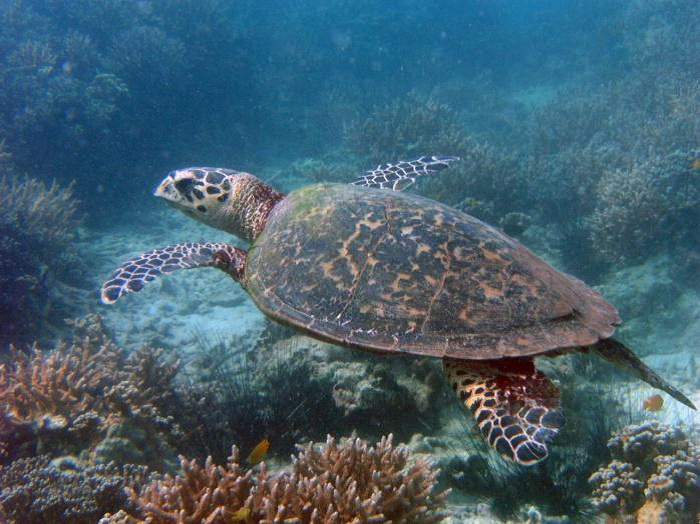
Hawksbill Turtles are sea turtles. They have brown shells which are strikingly coloured with irregular yellow and orange mottles. The upper jaw of the Hawksbill Turtle protrudes far beyond the lower one, giving its mouth the distinctive beak-like shape from which it gets its name. Another distinctive characteristic of the Hawksbill Turtle is that there are claws on its front flippers, unlike other sea turtles.
Distribution & Habitat
Hawksbill Turtles can be found in the tropical waters of the Atlantic, Pacific and Indian Oceans. They avoid deep waters, preferring shallow coral reefs.
They have been regularly sighted along the Singapore Strait. Females have also been spotted coming ashore at East Coast Park to lay eggs.
Behaviour
Hawksbill Turtles are carnivorous, feeding mainly on sponges and crustaceans.
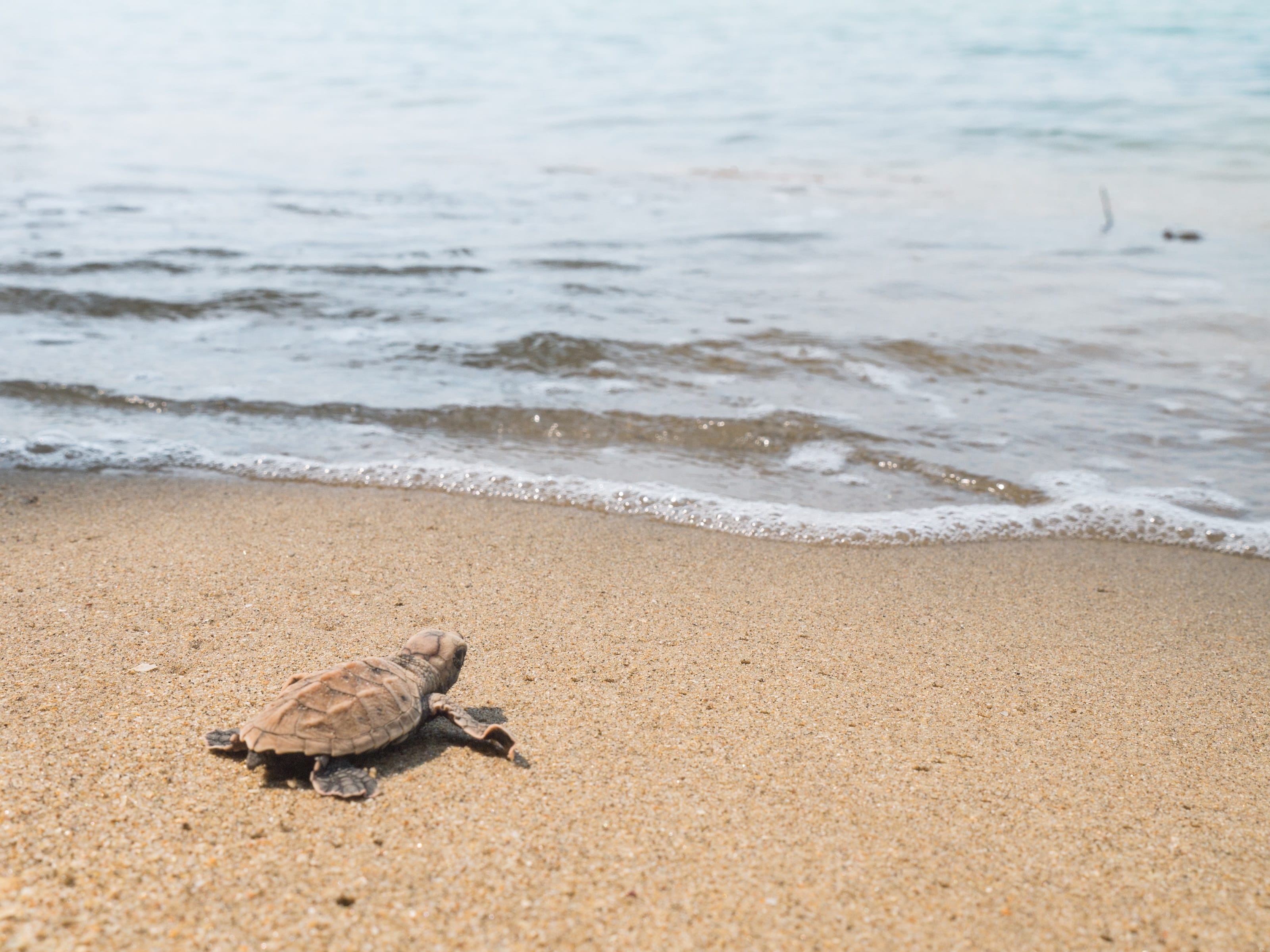
Hawksbill Turtles usually mate every two to three years. The female turtle then chooses a sandy beach to lay her eggs. This is usually done under the cover of the night. The female turtle can lay up to 200 eggs at a time. The eggs usually hatch after two months. The hatchlings instinctively head for the open sea. The journey between the nest and the sea is a short but dangerous one, as the baby turtles are preyed upon by shorebirds and crabs along the way.
Important Ecological Role(s)
Hawksbill Turtles play an important role in ecosystem balance by feeding on sponges, which maintains their population so that other marine animals like corals and sea fans have a chance and space to colonise.
Did you know?
Hawksbill Turtles have been affected by sea pollution and loss of nesting beaches to reclamation and other land uses. Many of them die after being accidentally caught in fishing nets. The Hawksbill Turtle is internationally acknowledged as a critically endangered species. Despite this, poachers continue to hunt the Hawksbill Turtle for its attractive shell. Some people illegally dig up the eggs to cook and eat them. Hatchlings have also been known to be sold on the black market as aquarium pets.
What should I do when I encounter a nesting turtle?
Call NParks’ Animal Response Centre at 1800-471-7300 to inform us of the sighting or for any assistance required.
Keep your distance from the turtle and the eggs.
Leave it alone, especially if it is in its natural habitat. Touching the turtle may scare or provoke it. Handling the eggs may damage them or introduce bacteria into the nest.
Talk softly and stay out of sight to avoid startling the turtle.
Do not shine lights at the turtle or use flash photography. Light and noise may scare the turtle and cause it to leave without laying any eggs.
Keep clear of tracks left by the turtle.
Researchers use the tracks to identify the species of the turtle and to locate the nest.
If you have further queries, please contact us through our online feedback form at https://www.avs.gov.sg/feedback.
Photos by Karenne Tun and National Parks Board