
Asian Glossy Starlings in Singapore
About Asian glossy starlings in Singapore and what to do when you encounter them
Last updated 30 October 2025
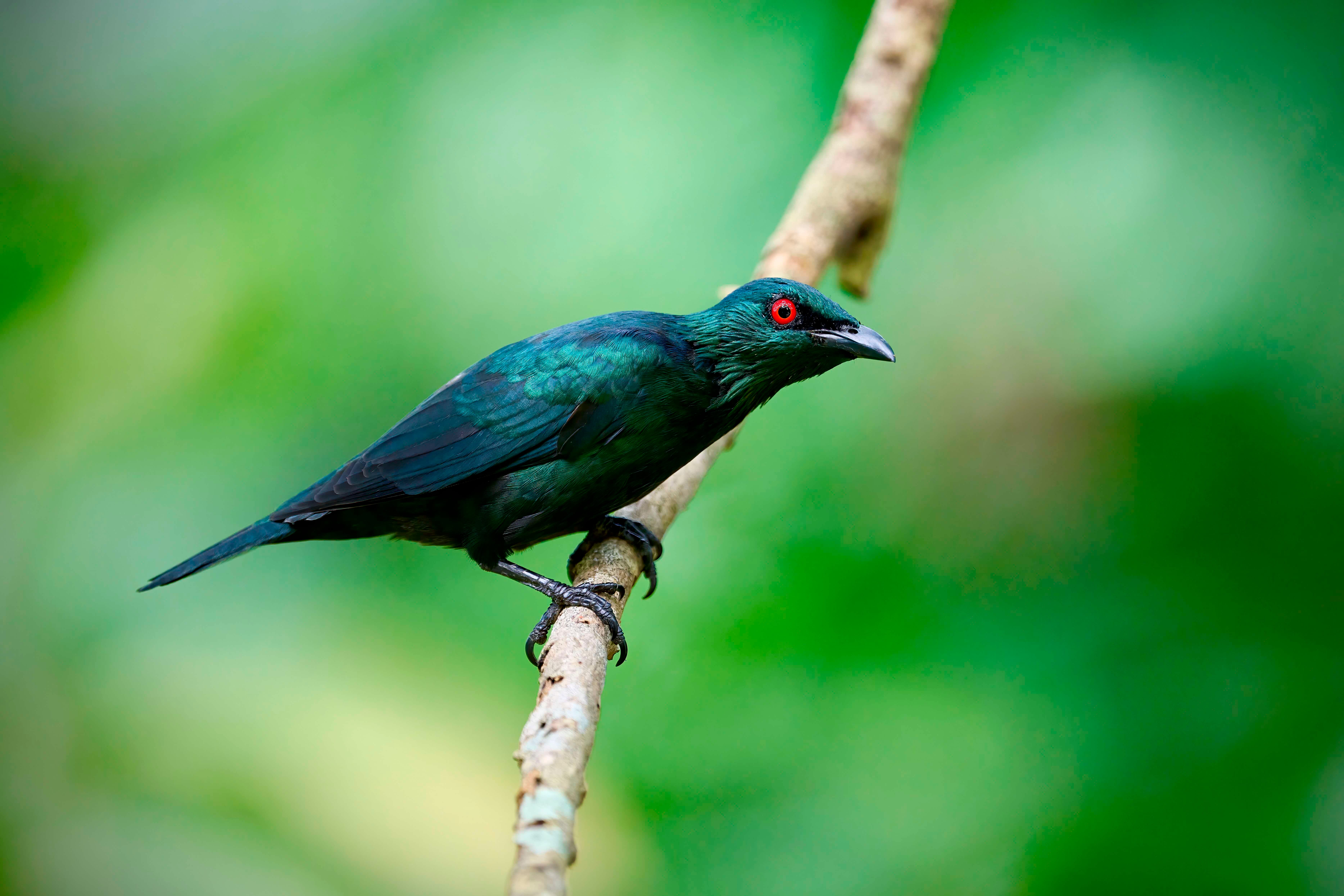
What are Asian glossy starlings?
The Asian glossy starling (Aplonis panayensis) is a very common resident bird in Singapore and is protected under the Wildlife Act. They have blackish-green plumage, black bill and legs, and bright red eyes. Juveniles differ greatly from adults in appearance, having a greyish plumage with bold dark streaks on the underparts instead.
Distribution & Habitat
Asian glossy starlings can be found in East India and parts of Southeast Asia. In Singapore, they can be found in forested areas, parklands and urban areas.
Behaviour
The Asian glossy starling’s diet consists of mostly fruits and occasionally insects. These birds form flocks when foraging and can often be seen or heard on fruiting fig trees.
What should I do when I encounter an Asian glossy starling?
If you come across starlings that are injured or distressed, call our Animal Response Centre at 1800-476-1600 and we will send professionals who are trained in handling and caring for wildlife to assist you.
Please avoid handling the starling yourself as this may cause further stress or injury to the animal.
Do not touch, chase, or corner the starling.
Observe the starling from a distance.
Do not feed the starling.
Feeding increases its reliance on humans for food and changes its natural foraging habits. Feeding it may encourage it to approach people for food, sometimes turning aggressive. This also causes its population to grow at an unnatural rate, affecting ecosystems that it is a part of. Feeding of all wildlife in Singapore is also prohibited under the Wildlife Act.
What should I do if I am affected by Asian glossy starlings?
Asian glossy starlings typically build their nest in a crevice such as those found naturally in a tree-hole. Occasionally, they may build their nest in the holes found in man-made structures. While the starlings are generally not aggressive to people, some people may be affected by the soiling brought about by their presence. To mitigate this issue, residents may consider covering the holes with a net or installing bird deterrent measures such as spikes.
If you have further queries, please contact us through our online feedback form.
Photo by Tan Heng Liang