Wild Boars in Singapore
About wild boars in Singapore and what to do when you encounter them
Last updated 31 October 2025
What are wild boars?
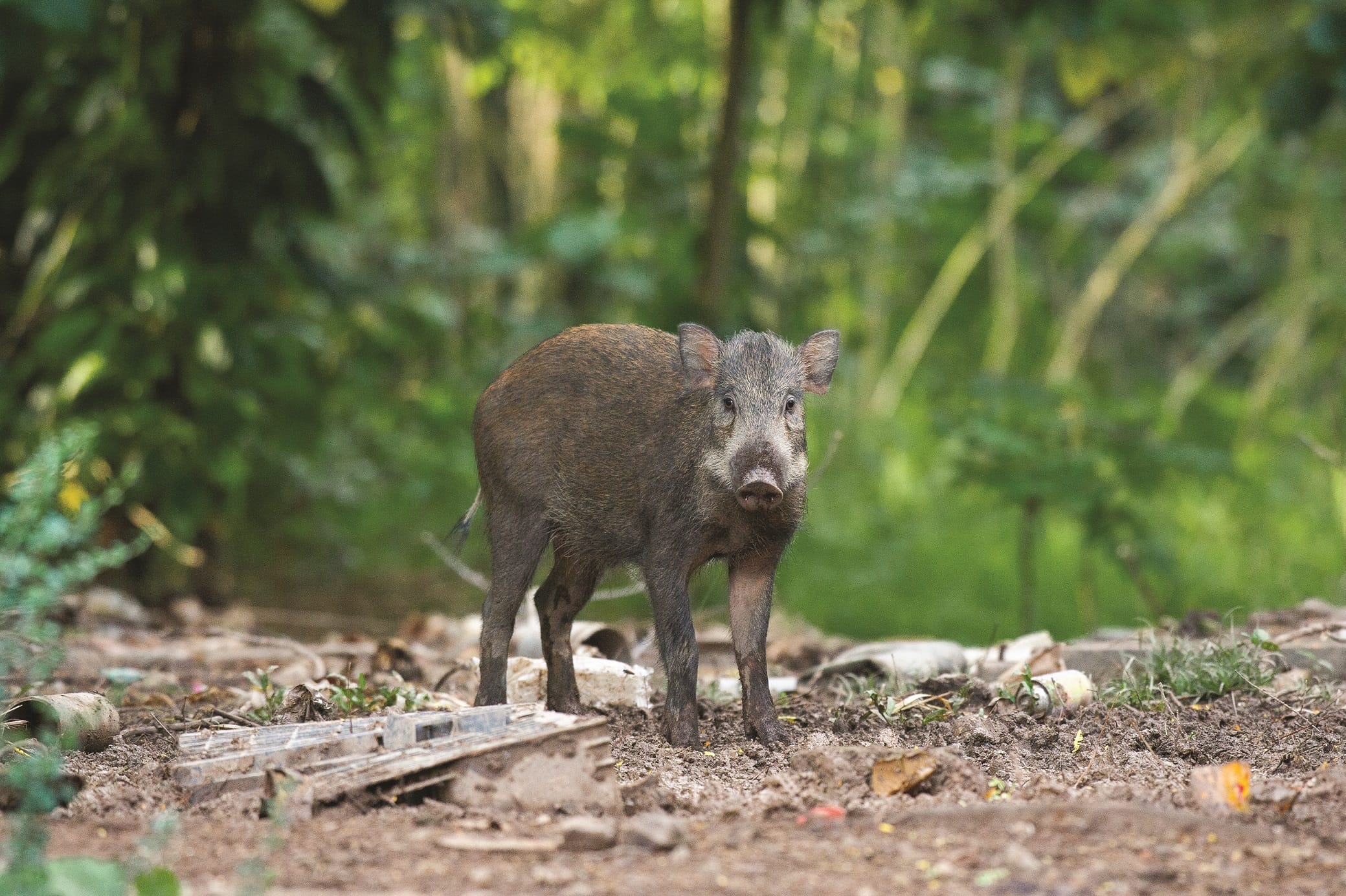
The Wild boar (Sus scrofa), a native species to Singapore, can weigh up to 100 kg and has a lifespan exceeding 20 years.
Distribution & Habitat
While the wild boar naturally inhabits forested areas, it can be encountered in the urban parts of the island too, especially in areas which are next to forested patches. Other habitats include grasslands and even mangroves forests.
Behaviour
Although omnivorous, their diet consists primarily of seeds, tubers and young plants.
Wild boars have high reproductive rates, giving birth up to twice a year with a litter size of up to 12 piglets. Female wild boars can start reproducing from 18 months of age. Their rapid reproduction rates, combined with ideal foraging habitats and a lack of natural predators, contribute significantly to their population growth.
Important Ecological Role(s)
With its acute sense of smell, the wild boar is able to dig out underground tubers and seeds for food. It consumes the seeds and release seeds as waste as it roams around the forest, thereby dispersing them in the forest.
However, the rapid increase in the wild boar population, largely due to a lack of natural predators, may adversely affect forest regeneration and local biodiversity.
Wild boars' natural foraging behaviour involves digging up soil, which can damage tree saplings and compromise reforestation and habitat enhancement efforts. If left unchecked, these activities could negatively impact the long-term viability of forest patches.
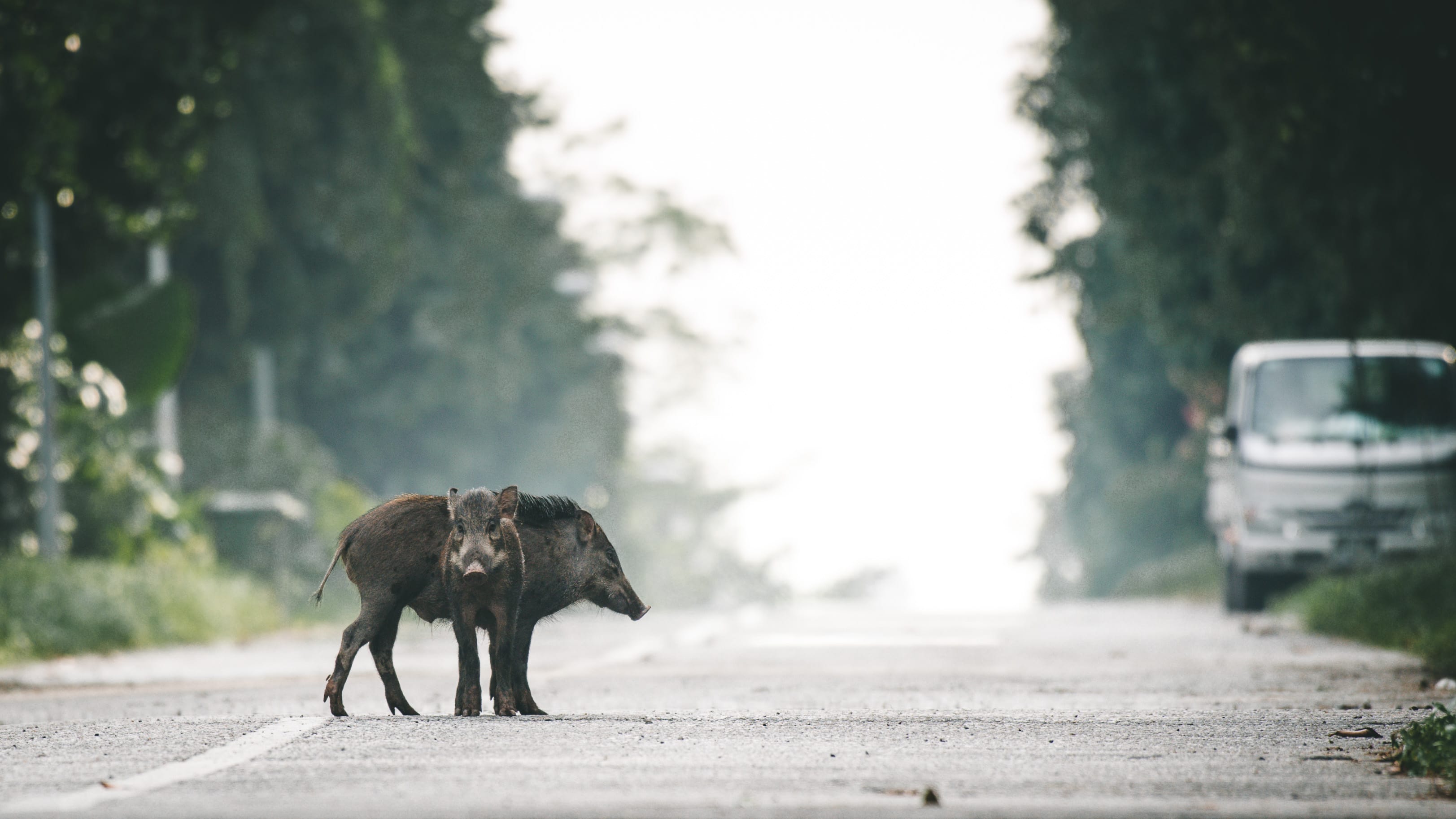
The increase in wild boar population may lead to increased human-wildlife conflict as these animals venture into parks, public roads and residential areas. Although generally shy, wild boars are unpredictable and may pose risks to public safety. Like many wild animals, they typically attack only when cornered or threatened.
Female wild boars are particularly protective of their young and can be easily provoked. Adult males possess tusks capable of inflicting serious injuries if they attack. Moreover, due to their solid build, wild boars can cause significant damage in vehicular collisions.
What should I do when I encounter a wild boar?
If you come across wild boars that are injured, distressed or trapped, call our Animal Response Centre at 1800-476-1600 and we will send professionals who are trained in handling and caring for wildlife to assist you.
Please avoid handling the wild boar yourself as this may cause further stress or injury to the animal. The wild boar may also bite in self-defence.
Do not touch, chase, or corner the wild boars, especially if there are piglets.
Wild boars are very protective of their young. Observe them from a distance. Going too close to the wild boars may frighten them and cause them to act in self-defence.
Do not talk loudly and do not use flash photography.
Noise and light may scare and provoke the wild boars.
Do not feed the wild boars.
Feeding increases its reliance on humans for food and changes its natural foraging habits. Feeding it may encourage it to head out of the forest more often and approach people for food, sometimes turning aggressive. This also causes its population to grow at an unnatural rate, affecting ecosystems that it is a part of. Feeding of all wildlife in Singapore is also prohibited under the Wildlife Act.
Keep your pets on a tight leash.
Your pet might chase the wild boars and frighten them. Keeping your pet on a tight leash and near to you will also keep it safe from wild boars.
Do not touch or pick up any sick or dead wild boars.
If you do encounter any sick or dead animals, please call the Animal Response Centre at 1800-476-1600 to report these sightings.
If you have been bitten or attacked by a wild boar, seek medical attention immediately.
What should I do if I am affected by wild boars?
Wild boars may be attracted to food sources in or around your home. To prevent wild boars from entering your home, practice proper food waste disposal. If you grow food plants such as edible roots and fruits, use a fence to prevent boars from accessing that area.
If you have fences around your property, wild boars may damage them while foraging for food due to their digging behaviour. Ensure that fences are made from sturdy material like galvanised steel and properly maintained with solid concrete base that is dug at least 30 cm into the ground.
If you have further queries, please contact us through our online feedback form at https://www.avs.gov.sg/feedback.
Photos by Max Khoo and Bryan Lim
Resources: