Domestic Trade Ban in Ivory
About Singapore's nationwide ban against trading ivory
Last updated 29 October 2025
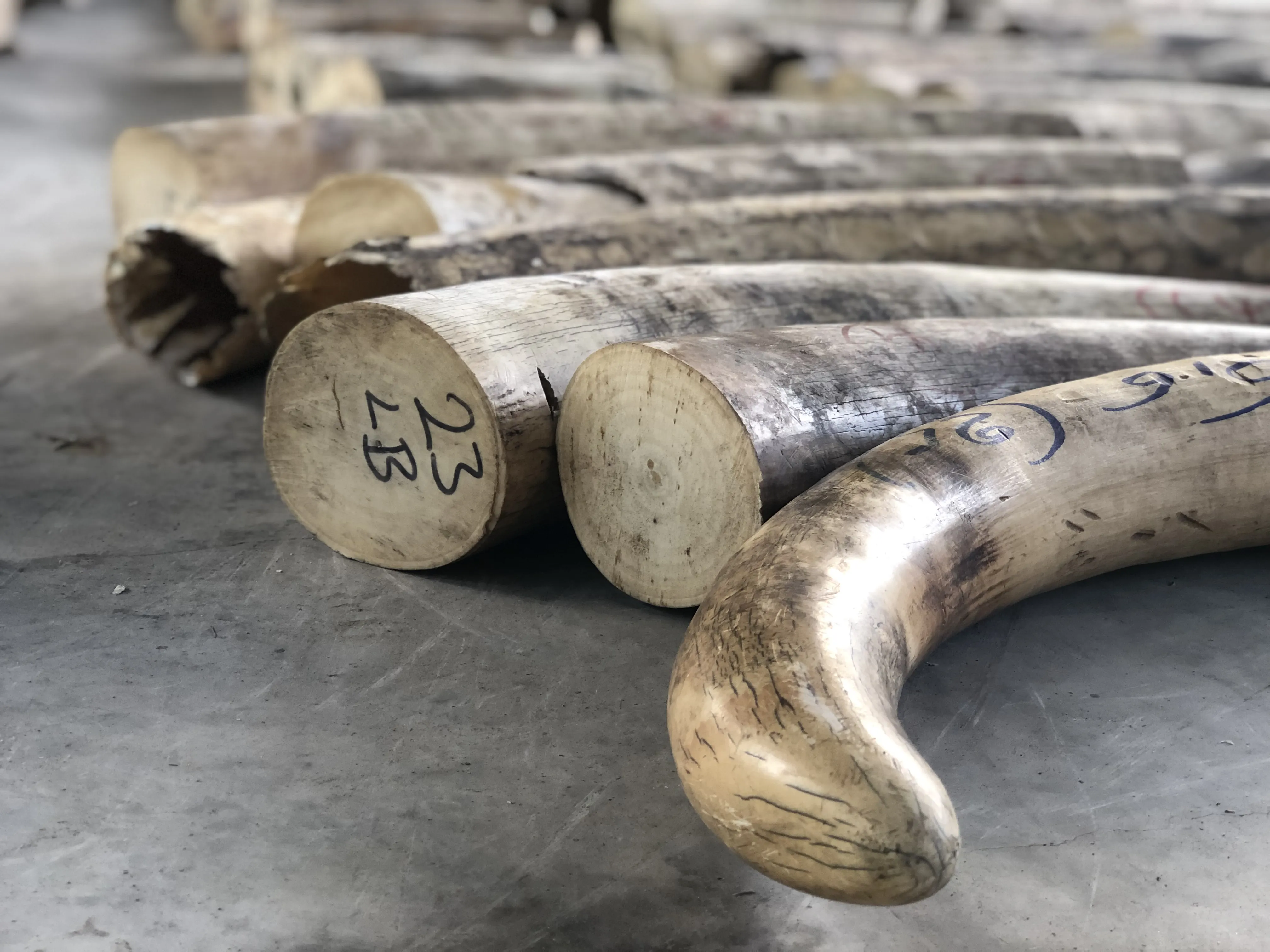
The domestic trade ban in elephant ivory came into effect on 1 September 2021. The Endangered Species (Import And Export) (Prohibition Of Sale) (Amendment) Notification 2021 prohibits the sale of elephant ivory and ivory products, and public display of elephant ivory and ivory products for the purpose of sale in Singapore. The public display of elephant ivory or ivory products for educational or religious purposes is permitted under the Endangered Species (Import And Export) (Display Of Elephant Ivory — Exemption) Order 2021.
Any individual or company found to have contravened the ban shall face the following penalties:
A fine of up to S$200,000 per specimen (not exceeding aggregate of S$1,000,000 or the market value of all specimens at the material time, whichever is higher); and/or
Imprisonment for up to 8 years.
This nationwide ban highlights Singapore’s resolve in the fight against illegal trade in species listed under the Convention on International Trade in Endangered Species of Wild Fauna and Flora (CITES). While NParks is the national authority responsible for the implementation and enforcement of CITES in Singapore, we work closely with partner enforcement agencies and stakeholders to maintain vigilance and tackle illegal trade of CITES-listed species. Everyone can play their part to help support the conservation of elephants by not using or buying elephant ivory or ivory products.
Frequently Asked Questions
I have inherited some elephant ivory/ivory products. Am I required to destroy them? What options do I have?
You can choose to keep your ivory stock, dispose of it or donate it to a museum for public education purposes.
You can contact NParks at cites@nparks.gov.sg should you require assistance with the disposal of your ivory stock. If you wish to donate your ivory stock to a museum, you may contact the museum directly.
Can I bring my personal ivory effect overseas when I travel?
You may enter or exit Singapore with personal ivory effects so long as you obtain a CITES permit from your destination country and country of departure each time. Personal ivory effects brought overseas from Singapore must not be sold outside of Singapore.
Those found without a CITES permit may be charged under the Endangered Species (Import & Export) Act, which carries a penalty of up to $50,000 in fine per specimen, not exceeding $500,000 in total and/or two years’ imprisonment upon conviction.
Can I buy ivory from my travels overseas and bring it back to Singapore?
You may buy ivory in countries where domestic trade is still allowed and bring it back to Singapore so long as you obtain a CITES permit from NParks (as Singapore is the destination country) and the country of departure.
Those found without the relevant CITES permits may be charged under the Endangered Species (Import & Export) Act, which carries a penalty of up to $50,000 in fine per specimen, not exceeding $500,000 in total and/or two years’ imprisonment upon conviction.
That said, we encourage individuals to play their part to help support the conservation of elephants by not buying ivory or ivory products.
Can I donate elephant ivory or receive ivory products as a gift in Singapore?
Yes. You may donate your elephant ivory or ivory products as a gift and receive them. However, you are recommended to maintain any records or documents to demonstrate the origin and chain of ownership of the item.
I am a musician and I have an instrument that contains ivory. Must I apply for a CITES permit every time I leave and re-enter the country for work?
Yes. There will be no change to the current practice. Musicians who travel with musical instruments that contain ivory will need to apply for a CITES permit each time they exit or enter Singapore.
The instrument must accompany the musician on travel out of and back into the country and may not be sold outside of Singapore.
I have a musical instrument/antique that contains ivory. It is damaged. Will I be able to send it overseas for repair?
Yes. You may send your ivory products overseas for repair with an accompanying CITES permit issued by NParks. However, NParks will require you to prove that your ivory product was imported prior to 1990. You must also bring the item back into Singapore and it must not be sold outside of Singapore.
Those found without a CITES permit may be charged under the Endangered Species (Import & Export) Act, which carries a penalty of up to $50,000 in fine per specimen, not exceeding $500,000 in total and/or two years’ imprisonment upon conviction.
Why is the domestic ban a blanket one? Are there no exemptions for special circumstances?
Singapore is a signatory to CITES. International trade in elephant ivory has been prohibited since 1990. The blanket domestic ban signals Singapore’s strong resolve to combat illegal wildlife trade, and the trade in elephant ivory and products. However, if there are very special circumstances, an appeal can be made to NParks.
Why is public display of ivory for sale not allowed?
The sale of elephant ivory or ivory products is not permitted from 1 September 2021. In this regard, the display of elephant ivory or ivory products for the purpose of sale is also not permitted. Public display of elephant ivory or ivory products for educational or religious purposes is permitted.
Can I wear elephant ivory accessories?
Yes. The ban only covers the public display of ivory for the purpose of sale. That said, we encourage individuals to play their part to help support the conservation of elephants by not using or buying ivory products.
Photograph by Jonathan Tan