Identifying songbirds
How we identify songbirds through wildlife forensics
Last updated 30 October 2025
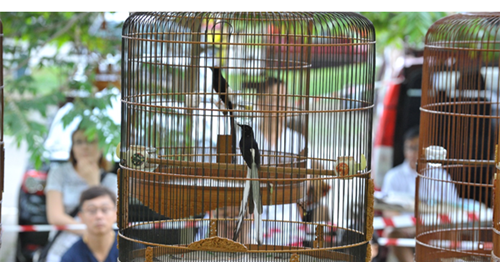
Songbirds (or perching birds/passerines) refer to birds belonging to the suborder Passeri of the order Passeriformes. These birds learn to sing as a form of vocal communication to allow other members of the same species to recognise themselves. There are around 8,000 extant species of birds around the world and songbirds make up nearly half of that number, with about 4,000 species spread across 35 to 55 families.
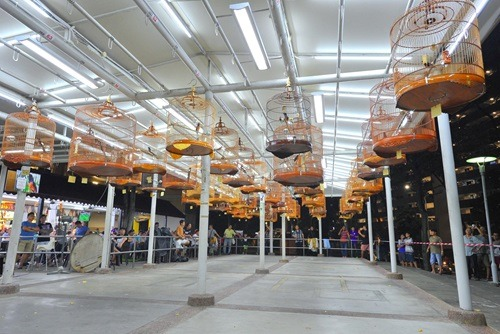
Songbirds are often kept as pets for their melodious singing and as symbols of status. In some countries, songbirds may also be a source of financial gain as owners enter them into singing contests.
Based on the IUCN’s Red List of Threatened Species, the conservation status of various songbird species can range from least concern to critically endangered. The Black-winged Myna is an example of a critically endangered songbird that is still being captured and sold as pets illegally in Southeast Asia.
Illegal songbird trade
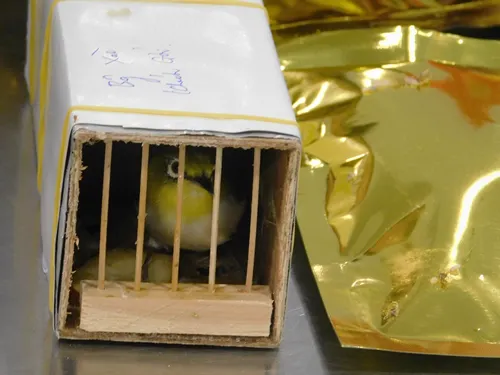
Songbirds are often smuggled alive across borders via various means. In August 2019, a man was caught smuggling 814 birds via a Malaysia-registered bus into Singapore through Woodlands Checkpoint. The smuggled birds were kept in 15 containers stored in modified compartments around the bus’ rear tyres. In July 2017, 4,280 White-rumped shamas were recovered from a cross-border seizure where the perpetrators tried to smuggle the birds from Malaysia to Indonesia by boat.
Trade regulation for songbirds
In Singapore, under the Endangered Species (Import and Export) Act (Cap. 92A), it is an offence to possess, sell, offer for sale, or publicly display any CITES-listed songbird species without a valid CITES permit. Under the Wildlife Act (Cap. 351), it is an offence to kill, trap, or take songbirds in our parks and nature reserves without approval.
In addition, during the first Asian Songbird Trade Crisis Summit held in 2015, The Southeast Asian Songbird Working Group identified a total of 28 species of songbirds facing high conservation concern and proposed various action plans such as systematic monitoring and increasing effective regulation. These include the Black-winged Myna, White-rumped Shama and Sumatran Laughingthrush.
How can I help?
If you are intending to purchase songbirds, always check to ensure that it is from a legal source. If the songbird is a CITES-listed species, ensure that the shop has a valid CITES permit for that bird, and for the shop to issue a Letter of Transfer detailing the CITES permit details, to you when you purchase it.
For the import and export of songbirds and other ornamental birds, various requirements such as applications of permits through NParks and ensuring that the birds fulfil veterinary conditions are to be met.
If you spot any occurrences of poaching of wild songbirds, illegal wildlife trade, and illegal ownership of species and its parts, you may contact NParks using the online feedback form or call the Animal Response Centre at 1800-476-1600. All information shared with NParks will be kept confidential.
References:
Lee, Jessica & Chng, Serene & Eaton, James. (2016). CONSERVATION STRATEGY FOR SOUTHEAST ASIAN SONGBIRDS IN TRADE: Recommendations from the first Asian Songbird Trade Crisis Summit 2015 held in Jurong Bird Park, Singapore, 27-29 September 2015. 10.13140/RG.2.2.12805.96483.