Caring for a cat
About feeding, enrichment, and veterinary care for cats
Last updated 13 January 2026

Nutrition for a cat
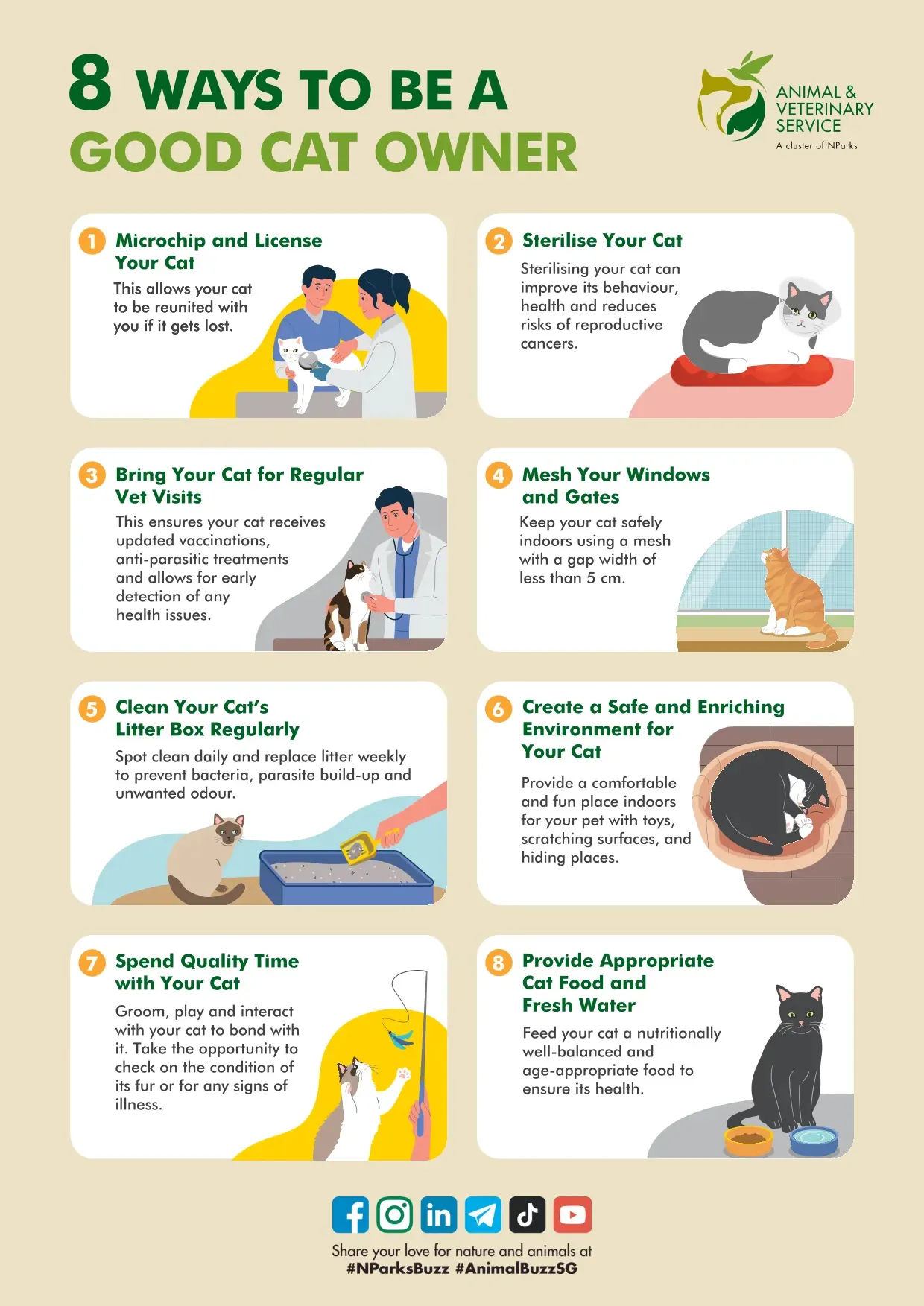
Complete, age-appropriate food is required for good nutrition. Cats are obligate carnivores and require food containing good quality, meat-based protein. They also prefer being fed small quantities of multiple meals throughout the day, originating from their life history of being opportunistic hunters of small prey. Follow the feeding guidelines on the food packaging to ensure your cat receives an appropriate amount of food daily.
Pregnant and nursing cats need more calories, whilst kittens have different nutritional needs depending on their age. Consult your veterinarian for specific nutrition guidance during these periods to ensure optimal health.
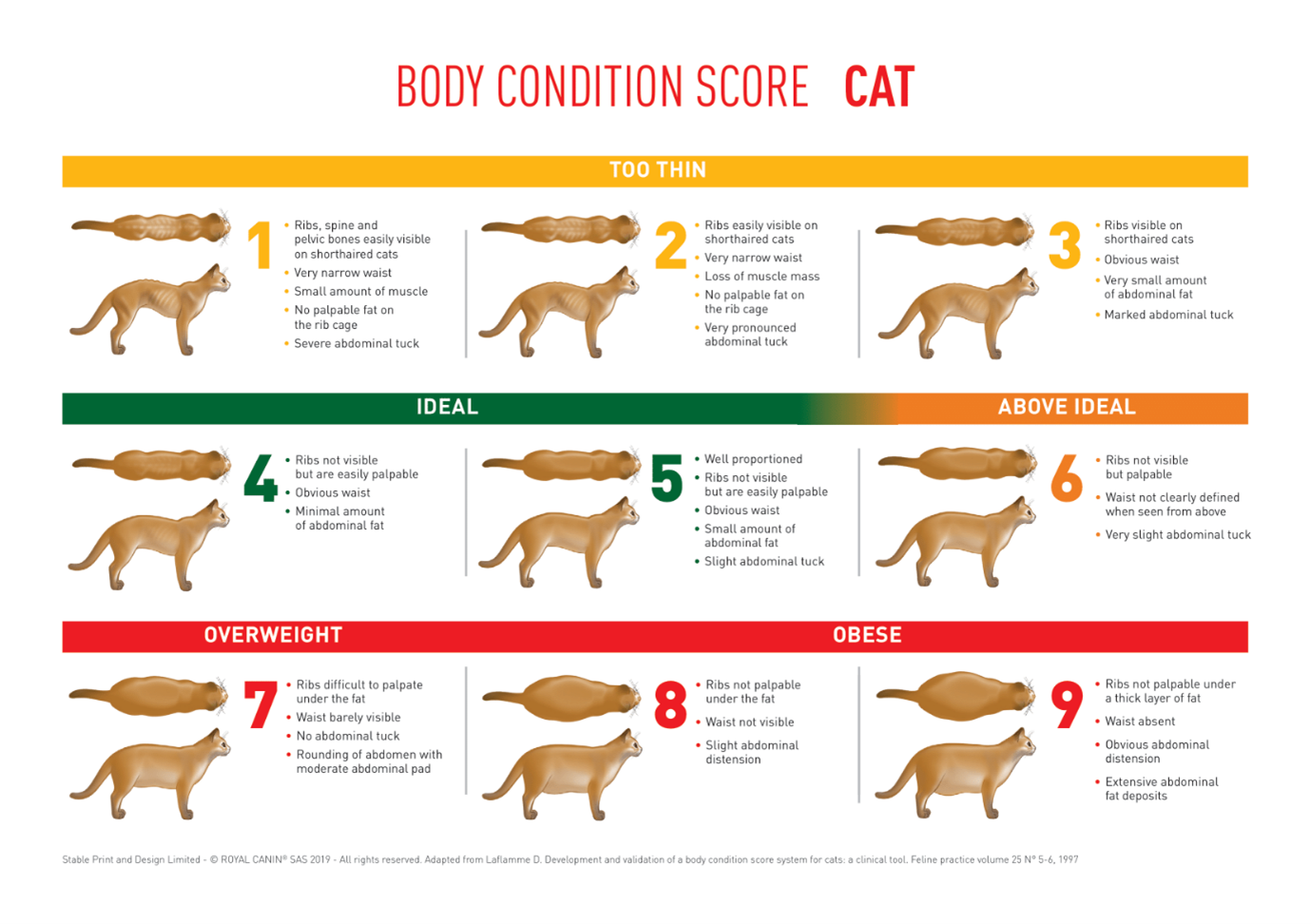
Monitoring your cat’s body condition score is a simple way to assess whether your cat is at a healthy weight. You may also check in regularly with your veterinarian to ensure your cat is of an ideal weight and body condition.
Enrichment for a cat
Cats should be kept safely indoors. However, it is important to provide enrichment to allow your cat to display natural behaviours, such as scratching, climbing or foraging. Otherwise, your cat may redirect these behaviours inappropriately and develop behavioural problems You can provide your cat with the following enrichment to meet their needs:
· Scratch boards or posts to allow for claw maintenance
· Platforms or cat trees as cats feel safer when they can view their surroundings from a height
· Hiding box or any secure space where your cat can get away from potential stressors in the environment
· Cat toys or collapsible tunnels for play and to express hunting behaviours. DO NOT use string, yarn, rubber bands or aluminium foil as cats can swallow it and cause a fatal bowel obstruction
· Interactive feeders or providing food in puzzle balls
If you have multiple cats at home, always provide ample resources to prevent competition. Follow the "n+1 rule" – for every cat, provide one extra of each essential item, especially if the cats are not closely bonded. For example, two cats should have three litter boxes, food bowls, water bowls, and multiple resting areas. These items should also be spread out around the house to allow for separate access points, reducing conflict and stress.
Grooming for a cat
Regular brushing once or twice a week is beneficial for maintaining the coat in good condition. It is especially important in breeds with long or thick fur coats to prevent matting of their fur. Senior cats and those who are unwell may also need extra grooming assistance, as they often groom themselves less thoroughly than healthy adult cats. Regular brushing also provides an opportunity to check for any skin issues or lumps.
Trim your cat's nails regularly to prevent overgrowth. If your cat resists, start slowly by handling their paws during relaxed moments, then gradually introduce nail clippers. Trim just one or two nails per session and reward with treats and praise until they become comfortable with the process.
It is also good practice to check and clean your cat’s ears regularly (once a week / fortnight). If you're new to ear cleaning, seek guidance from your veterinarian who can demonstrate proper technique and recommend suitable cleaning products. Never use cotton buds or insert anything deep into the ear canal, as this can cause injury. If you notice excessive dirt buildup, strong odours, frequent head shaking, or persistent scratching at the ears, do bring your cat to your private veterinarian as these signs may indicate an ear infection.
Veterinary care for a cat
Bring your cat for annual veterinary check-ups to monitor their health and ensure vaccinations and parasite preventatives are up-to-date. However, don't hesitate to schedule additional visits if you notice any changes in behaviour, appetite, or health concerns throughout the year. Early detection of health issues can make a significant difference in treatment outcomes.
The following is a list of some conditions that require immediate veterinary attention:
- Difficulty breathing (gasping for air, breathing heavily, excessive panting)
- Seizures or neurological symptoms (head tilt, circling)
- Unable to stand or walk, limping
- Straining to urinate or not urinating for more than 24 hours
- Not defecating for more than 24 hours
- Weight loss despite normal appetite
- Diarrhea and/or vomiting
- Lethargy
- Refusal to eat or drink