Caring for a fish
About feeding, housing, and veterinary care for fish
Last updated 13 January 2026
Nutrition for a fish
Life stage
Newly hatched fry can be given commercial fry food, artemia, baby brine shrimp and other suitable diets in multiple small feedings throughout the day.
Types
Puffer fishes - Primarily carnivorous: Bloodworms, Mussels, Shrimp, Snails etc.
Guppies - Omnivorous: Guppy pellets, Guppy flakes, Brine shrimp, Lettuce, Bloodworms etc.
Arowanas - Carnivorous: Protein-rich diet of carnivorous fish pellets, supplemented with shrimp, krill, worms, small fish, insects etc.
Goldfishes - Omnivorous: Goldfish pellets, Goldfish flakes, Chopped vegetables, Brine shrimp etc.
Tank for a fish
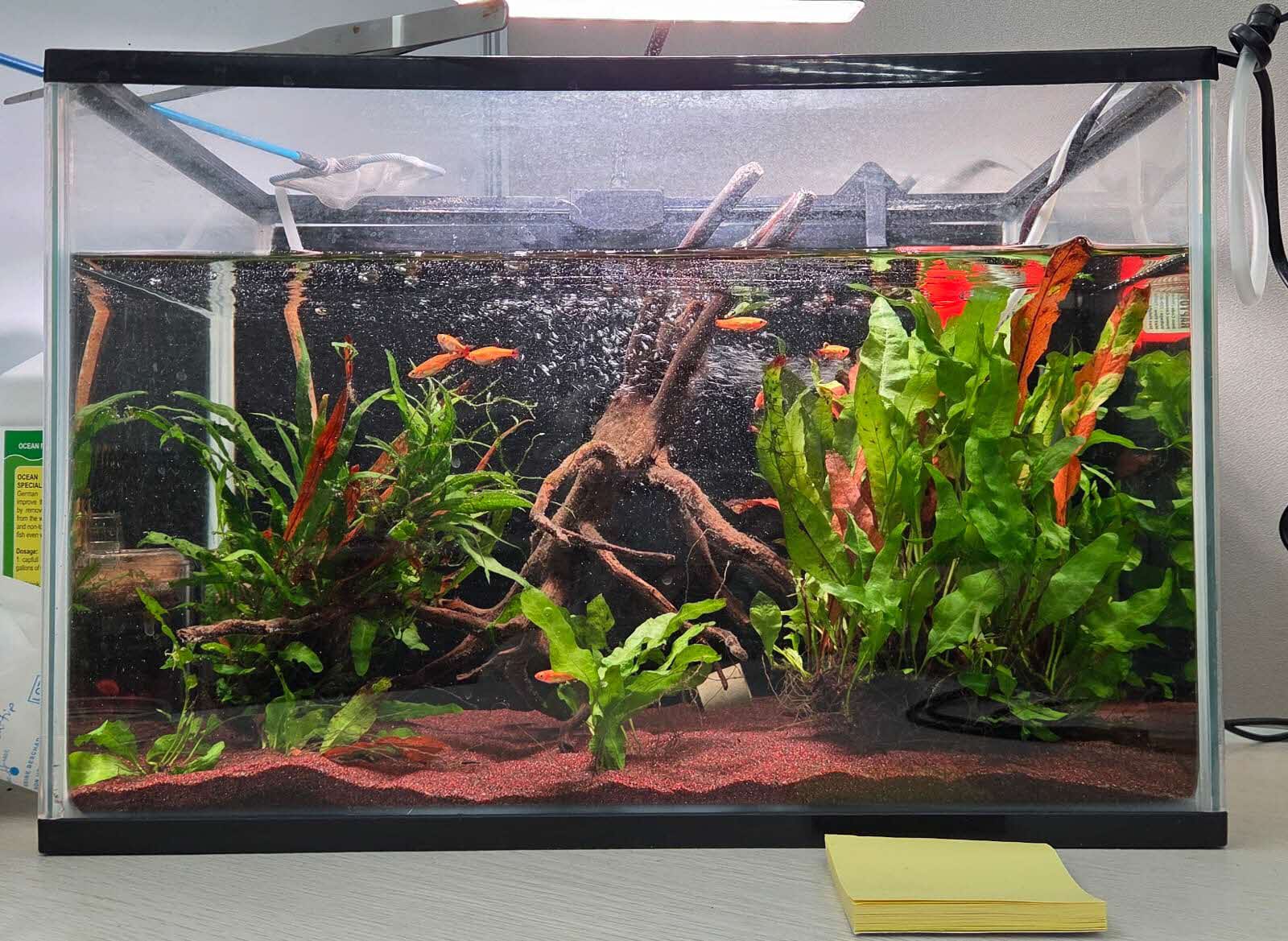
Tank size: Ensure that the tank is large enough for your fish type and number of fishes. The larger your fish and the more fishes you have, the larger your tank has to be. A common misconception many have is that small fishes, such as goldfish, require only a small tank. Some fish can also grow significantly in size from young to adult. As a rough guide, provide at least 1.5 litres of water per 1cm of tropical fish length. For example, a small goldfish should be housed in at least a 10-gallon tank.
Tank location: The tank should also be placed on a sturdy surface, away from direct sunlight.
Water type: Does your tank require fresh or saltwater? For freshwater tanks, tap water should be dechlorinated before being used for keeping fish. Saltwater or marine tanks require more maintenance. Pre-mixed saltwater can be purchased from an aquarium store or prepared by mixing water with marine salt.
Set-up: The tank should have substrate, aquatic plants, hiding spaces, a filter, air-pumps and other necessary accessories. Cycle the tank before adding fishes in. This helps to establish a good bacteria population within the tank to break down waste and maintain water quality.
Cleaning: Conduct regular cleaning, water changes and parameters tests to ensure your tank water quality is appropriate for the fishes. Uneaten food and excess waste from the fishes can cause ammonia in the tank to spike, which can affect their health and welfare, even possibly leading to death.
Compatibility with other species: Buying new fishes? Remember to do your research on whether your new fishes are compatible with your current fishes. Keeping incompatible fishes with each other can result in stress, bullying and cannibalism. Consider tfactors such as the species, size, appropriate habitat and typical behaviour of the fish before purchasing new fishes for the tank:
Introduction of new fishes: Quarantine all new fishes before adding them into the tank, to prevent the spread of diseases to your resident fishes. Avoid adding too many fishes to the tank at once so that the tank and its environment can slowly adapt.
Veterinary care for a fish
Like other pets, fishes are also susceptible to diseases and parasites like white spot disease, fin rot and swim bladder disease. Monitor your fish for abnormal behaviour or physical conditions and seek veterinary assistance if you notice any of the below signs:
Loss of appetite
Inability to stay afloat
Swimming sideways
Protruding eyes
Rubbing of their body against the tank surface
White spots on their body
Unusual growths on their body
Abnormal-looking fins
Raised scales
Isolation from other fishes in a group