Caring for a rabbit
About feeding, housing, enrichment, and veterinary care for rabbits
Last updated 13 January 2026
On this page
Nutrition for a rabbit
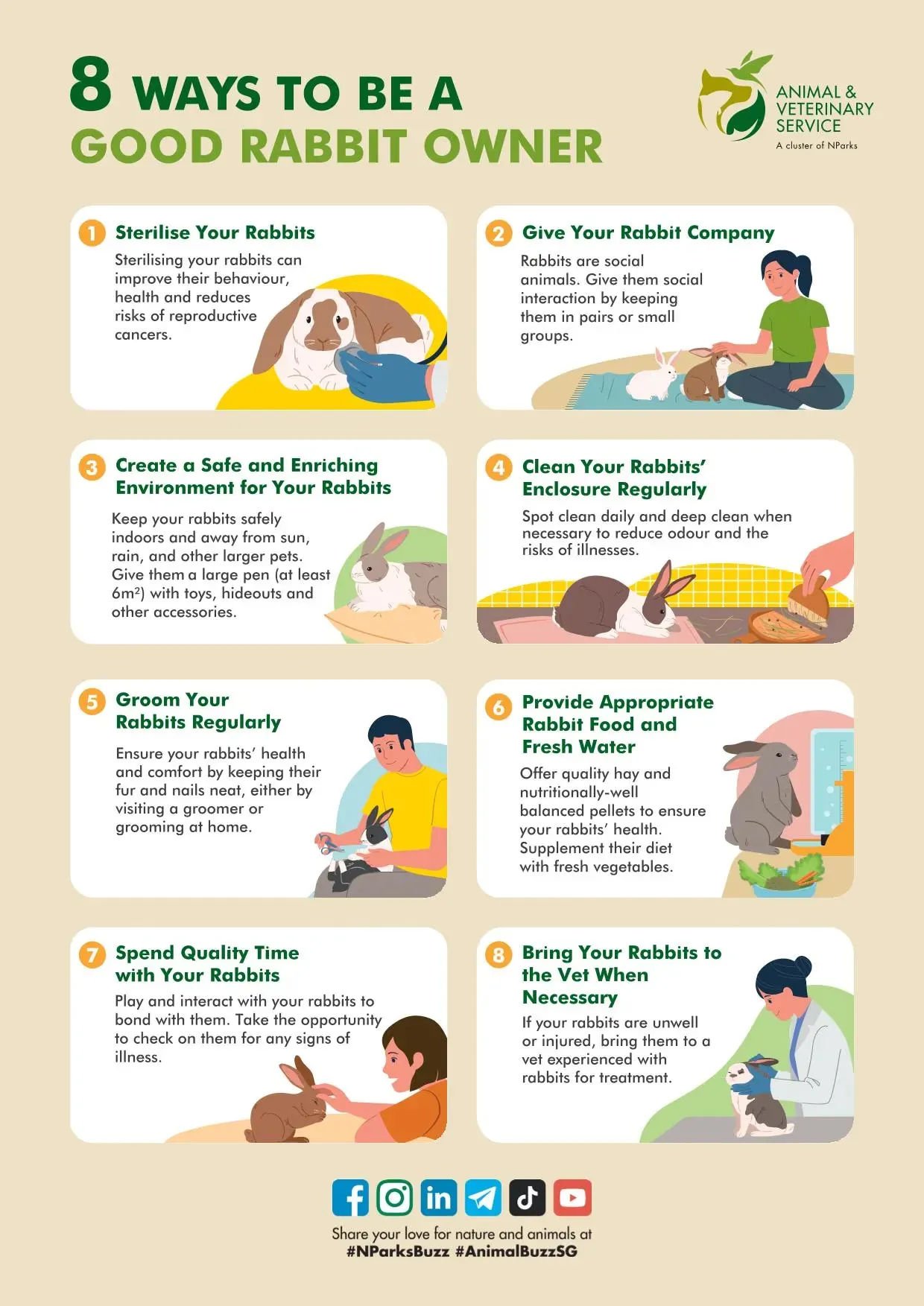
Rabbits are herbivores. Provide fresh clean water daily, and feed appropriate diets.
An ideal rabbit diet is as follows:
(Approximately 80% of diet) High-fiber, low calcium grass hay, such as timothy and orchard grass hay for adults.
Younger rabbits can be fed with alfalfa hay which has higher calcium and protein content. Feeding too much alfalfa hay to adults can lead to obesity and other health-related issues.
Some fresh vegetables such as dark leafy greens. Make sure to research on which vegetables are safe for your rabbit.
A small amount of commercial pellets.
Enclosure for a rabbit
Their enclosures should reflect their natural behaviour as closely as possible, and provide them opportunities to do so.
Cage
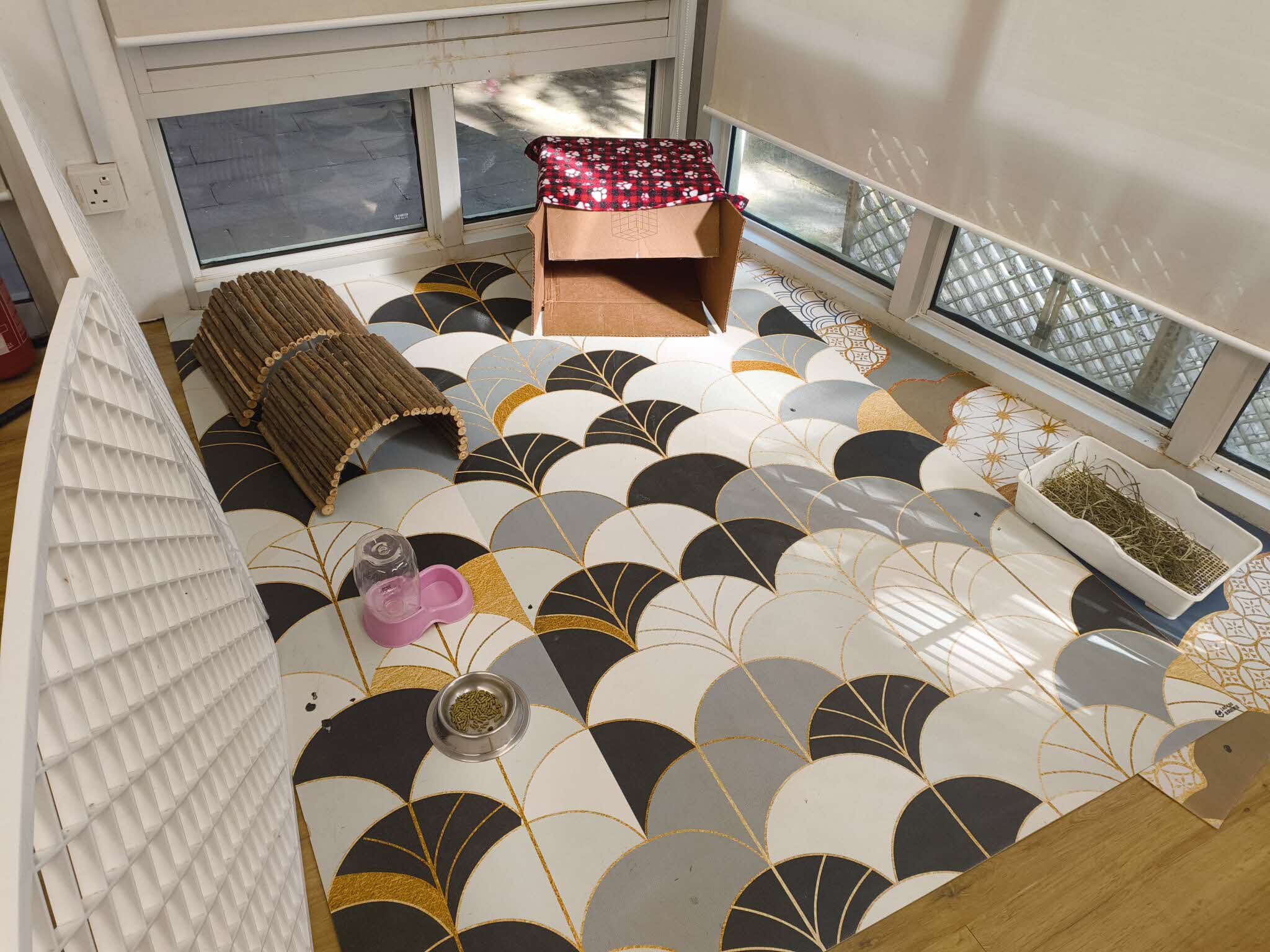
The cage should be well-ventilated and allow the rabbit to complete three full hops in all directions at minimum.
Accessories
Provide adequate hiding spaces and comfortable bedding.
Litter box
Should be open and at least twice the size of the rabbit.
Use paper-based litter and change it daily.
Keep litter boxes away from their resting areas.
Environment
Provide a sturdy, solid flooring to prevent bumblefoot.
Cover and hide all exposed wiring as rabbits love to chew on them, which can be dangerous.
Rabbits can hear very well and tend to get stressed in loud environments. It is best to keep them in a quiet room, away from traffic and noise.
Compatibility with other animals
Rabbits are social animals and should ideally by housed together with other rabbits. However, their interaction should always be monitored to prevent fights.
Do not house rabbits with guinea pigs.
Enrichment for a rabbit
Provide plenty of opportunities for your rabbits to exhibit their normal behaviours such as burrowing, foraging and chewing/gnawing.
Veterinary care for a rabbit
Bring your rabbits to the vet for regular health checks, and to keep them up-to-date on their vaccinations and preventatives.
Seek medical help if you observe any signs of illness in your rabbit, such as:
· Lethargy
· Inappetence
· Abnormal breathing
· Abnormal or no faecal droppings and/or urine
· Bloated abdomen
· Head tilt/shaking
· Lameness
· Overgrown teeth and nails
Sterilisation and breeding
Rabbits can start breeding at 4 months old. Sterilise your rabbits or keep them separate to prevent unwanted breeding of litters.
House them together with individuals of the same sex to prevent unwanted breeding.