Caring for a terrapin
About feeding, housing, and veterinary care for terrapins
Last updated 13 January 2026
On this page
Nutrition for a terrapin
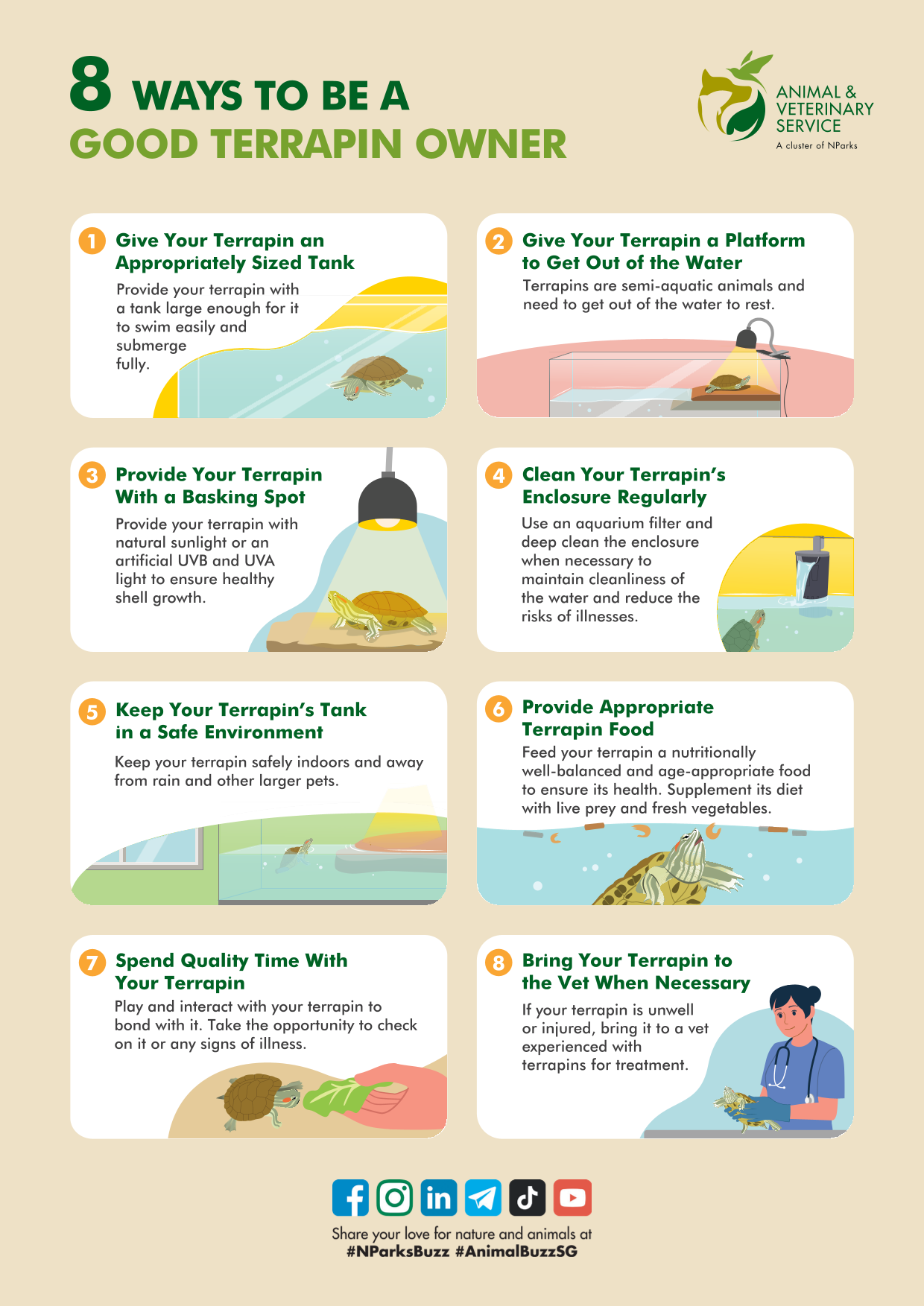
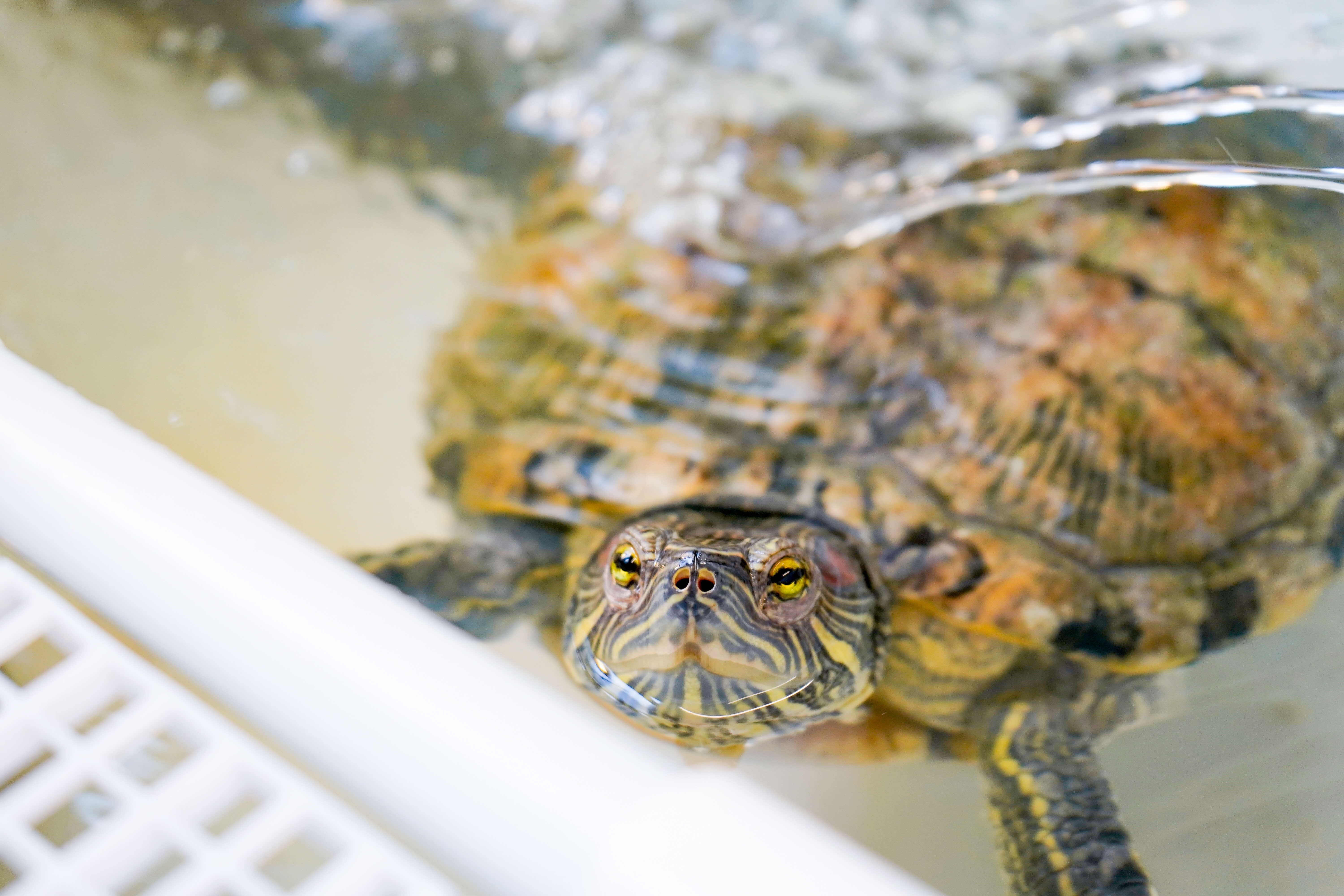
Red-eared sliders are omnivorous animals. Feed a balanced diet of proteins, leafy vegetables and occasionally fruits to your red-eared sliders (RES). Feed high-quality commercial turtle pellets as they are formulated to be balanced but if you would like to supplement your terrapin’s diet, consider feeding a variety of:
Proteins: Mealworms, Crickets etc.
Vegetables: Dandelion greens, Collard greens etc.
Fruits: Berries, Apples, Melons etc.
Fruits that are high in sugar and should be fed in moderation as treats. A diet high in sugar can cause them to fall sick.
Do not feed citrus fruits (E.g. Oranges, Lemons, Grapefruits etc.) to your terrapins as they can cause stomach upset.
Calcium and Vitamin supplements
Terrapins require calcium for health shell growth. A diet lacking in calcium can lead to shell deformities which is irreversible and affects the welfare of the terrapins.
Tank for a terrapin
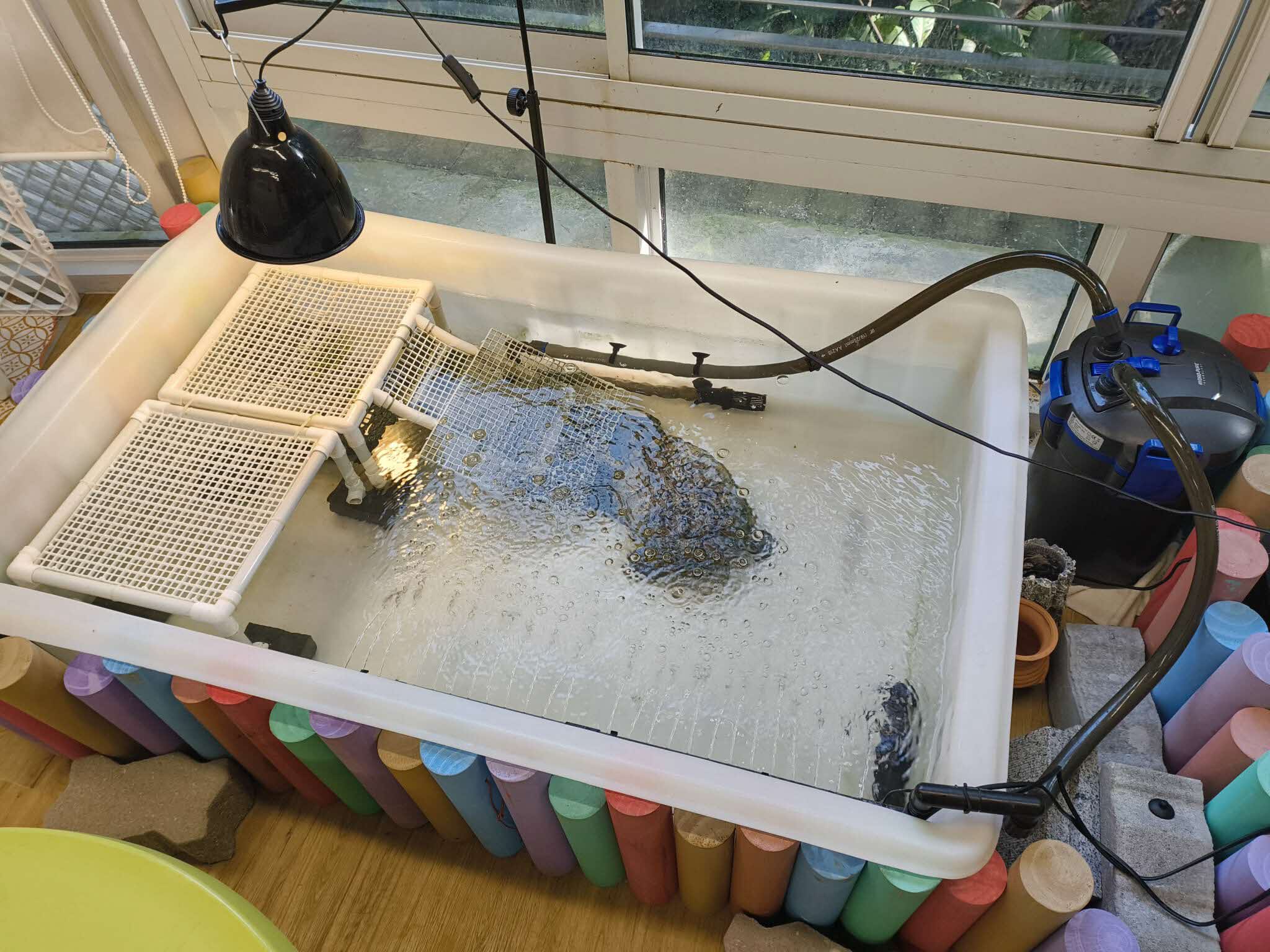
Tank size: Ensure that the tank is large enough for your terrapin. As a general guide, the tank should be 5 times as long as the length of your terrapin. Since terrapins can reach 20-30cm in length as adults, plan for a substantial enclosure from the start.
Water level: The tank water level should be deep enough for your terrapin to swim in, generally twice the depth of your terrapin’s length.
Set-up: A basking platform large enough for your terrapin must be provided. Ensure there is a good ramp for your terrapin to walk up to the platform from the water. UV-B light should be suspended over the basking platform, at a height from not more than 20cm from the top of your terrapin. This is crucial in ensuring your terrapin can produce vitamin D and absorb calcium from its diet. The UV-B bulb must also be changed every 6 months.
Cleaning: Conduct regular cleaning and water changes to ensure the tank water remains clean. Remove uneaten food and waste daily to prevent ammonia buildup, which can be toxic to your terrapin. Ideally, you should also have a water filter to keep the water fresh, and the tank should also be cleaned fully at least once every one to two weeks.
Veterinary care for a terrapin
Like all other pets, red-eared sliders are also susceptible to diseases like shell rot, aural (ear) abscesses and metabolic bone disease and parasitic infections. It is recommended that your terrapin is seen by a veterinarian annually for a general health check. Monitor your terrapin’s behaviour and seek veterinary attention earlier if you notice any of the following signs:
· Loss of appetite
· Abnormal swimming
· Inactivity/Lethargy
· Skin changes
· Shell deformities
· Breathing abnormalities
· Eye abnormalities (e.g. swollen eye)
· Nasal discharge
Precautions when caring for a terrapin
Terrapins and other reptiles can carry Salmonella bacteria. It is a zoonotic disease that can be transferred to, and between humans. Always wash your hands thoroughly with soap and warm water after handling your terrapins, cleaning their tank, or touching their food. This is especially important before eating, drinking, or touching your face. Children, elderly individuals, and those with compromised immune systems should take extra precautions when interacting with reptiles.